A used car can be one of the smartest purchases you make — or one of the most expensive mistakes of your life. In Pakistan, where the used car market runs largely on trust, informal networks, and word of mouth, buyers face real risks if they walk in unprepared.
Whether you are looking at a Suzuki Alto, a Kia used car in Pakistan, or a Japanese import, the process demands patience, homework, and a clear head. This guide walks you through the ten most common mistakes Pakistani buyers make — and exactly how to avoid them.
1. Skipping the Ownership History Check
The first thing you should verify is whether the seller is the actual owner. Request the original registration certificate (RC book) and confirm that the CNIC matches. A car that has changed hands multiple times without proper transfers is a legal headache waiting to happen.
Always verify ownership at your local Excise and Taxation office or through the Punjab, Sindh, or KPK vehicle verification portals before any money changes hands.
2. Not Running a Theft or Encumbrance Check
This is one of the most overlooked steps. A car can look perfect on the outside, but carry a stolen vehicle report or a bank lien against it. Running a quick check through the relevant provincial motor registration system takes less than an hour and can save you hundreds of thousands of rupees.
3. Trusting the Odometer Blindly
Odometer tampering is common in Pakistan's used car market. A car showing 60,000 km may have actually run 160,000 km. Look for wear indicators — steering wheel grip, seat fabric, brake pedal rubber, and gear knob condition. If the interior looks far more tired than the odometer suggests, trust your eyes.
4. Skipping a Proper Mechanical Inspection
Never buy a used car without taking it to a trusted mechanic first. A pre-purchase inspection should cover:
- Engine compression and oil leaks
- Transmission smoothness
- Suspension and steering play
- Brake performance
- AC cooling efficiency
- Battery and alternator condition
Spending Rs. 2,000–3,000 on a professional inspection can save you from a Rs. 200,000 engine repair later.
5. Ignoring Body Panel Alignment
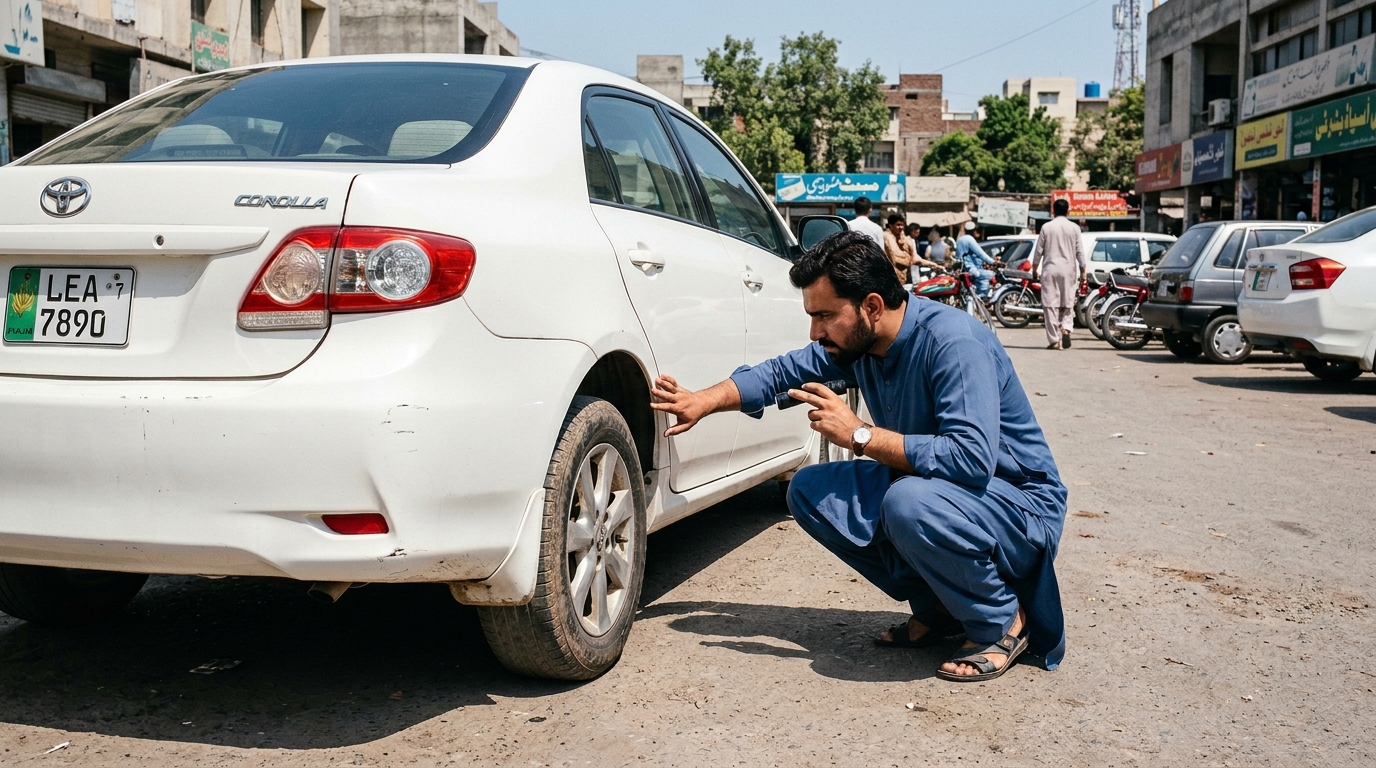
Run your hand along the car's body panels and look at the gaps between doors, bonnet, and bumpers. Uneven gaps or mismatched paint shades usually indicate previous accident repair. A car with hidden accident damage depreciates faster and may have compromised structural safety.
A paint thickness meter, available at most inspection points, will reveal repainted panels that hide previous damage.
6. Not Test-Driving on Multiple Road Types
A short drive around the block is not enough. Test the car on a highway stretch, a bumpy local road, and in stop-and-go traffic. Listen for unusual noises during acceleration, braking, and turning. Feel for vibrations in the steering. These are things that never show up parked in a driveway.
7. Letting Emotion Drive the Negotiation
Sellers know that excited buyers pay more. If you have visited the same listing three times in two days, the seller already has the upper hand. Always be willing to walk away. Research market rates thoroughly before meeting — knowing the fair price range for any model in Pakistan gives you real negotiating power.
For practical guidance on evaluating second-hand products before you commit, the guide on how to quality check used items in Pakistan before you buy is worth reading before your visit.
8. Paying Cash Without Documentation
Never hand over cash without a signed sale agreement. The agreement should include the car's make, model, year, engine number, chassis number, agreed sale price, both parties' CNICs, and the transfer date. Even between friends or family, a written record protects everyone.
If the seller refuses to sign anything, that is your signal to leave. For more on staying safe during transactions, check out online safety tips for classifieds in Pakistan — many of the same principles apply to in-person car deals.
9. Forgetting to Budget for Transfer and Tax Costs
The sale price is not your total cost. Token tax, transfer fee, and late registration penalties can add up — sometimes significantly, depending on the car's year and engine size. Ask the seller upfront whether the token tax is paid and whether there are any outstanding challan fines. Factor these into your offer.
10. Relying Only on One Listing Source
Limiting your search to one platform means you miss out on better deals and cars. Browse multiple listings, compare prices, and never rush. Pakistan's used car market has no shortage of options — patience is your biggest advantage as a buyer.
DealDone's used cars listings in Pakistan give you access to a wide range of verified local listings so you can compare options, spot fair pricing, and connect with sellers directly.
Second-Hand Car Buying Checklist (Quick Reference)
Before you finalize any deal, run through this list:
- ✅ Original RC book verified, CNIC matches
- ✅ No theft or bank lien on vehicle
- ✅ Odometer cross-checked with wear signs
- ✅ Professional mechanical inspection done
- ✅ Body panel alignment checked for accident history
- ✅ Test drive completed on varied roads
- ✅ Market price researched before negotiation
- ✅ Written sale agreement signed
- ✅ Token tax paid, no outstanding fines
- ✅ Transfer submitted at the Excise office
Frequently Asked Questions
Q1: What documents should I check when buying a used car in Pakistan? Always verify the original registration book (RC book), the seller's CNIC, and the ownership record, and ensure the vehicle has paid token tax and has a clear vehicle history with no theft or lien reports.
Q2: How do I check if a used car is stolen in Pakistan? You can verify through your provincial vehicle verification portal (Punjab, Sindh, KPK, or Balochistan). The Excise and Taxation department provides this service, sometimes online, and it is free or low-cost.
Q3: Is buying a used Kia car in Pakistan a good investment? Kia has strong resale value in Pakistan due to reliable parts availability and growing dealership networks. Just ensure the car's service history is available and the vehicle has not been in a major accident.
Q4: How much does a pre-purchase car inspection cost in Pakistan? A basic mechanical inspection typically costs between Rs. 2,000 and Rs. 5,000, depending on the city and the workshop. It is one of the best investments you can make before buying.
Q5: Can I negotiate the price of a second-hand car in Pakistan? Absolutely. Research the fair market rate for the model and condition, then negotiate from there. Most sellers in Pakistan list at a slightly higher price, expecting a counteroffer. Being informed is your strongest tool.
Q6: What is the safest way to pay for a used car in Pakistan? Avoid handing over cash in full without a signed agreement. Paying via bank transfer creates a paper trail. Always complete the deal with a written sale contract that includes all vehicle details and both parties' CNICs.
Conclusion: Buy Smart, Not Sorry
The used car market in Pakistan is full of genuine deals — but only for buyers who do their homework. Skipping even one step in this checklist can cost you dearly. Take your time, bring a mechanic, verify every document, and never let excitement override judgment.
Ready to find a reliable second-hand car near you? Browse genuine used car listings across Pakistan on DealDone and connect directly with local sellers — no middlemen, no hidden fees.
Have a car to sell? Post your listing on DealDone and reach thousands of buyers in your city today.
Stay connected with DealDone on Facebook, Instagram, and LinkedIn for the latest listings, buying tips, and marketplace updates.