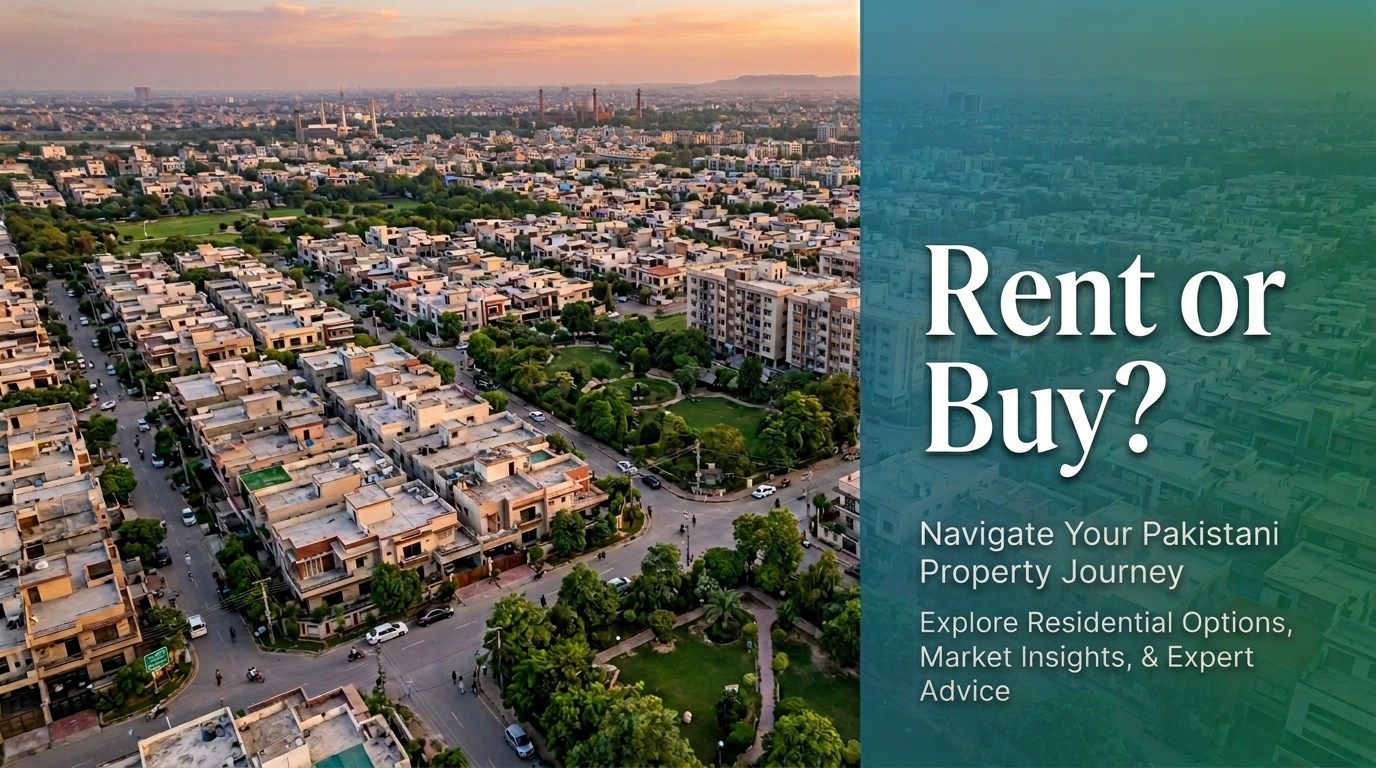
Property decisions are never simple — but in Pakistan right now, they feel especially complicated. Prices have risen sharply in major cities, the rupee has gone through turbulent stretches, and interest rates on home financing remain high. Whether you are a young couple weighing your first home or a family deciding whether to renew a rental lease or finally commit to buying, this question deserves an honest answer.
This guide breaks down the rent vs. buy property debate in Pakistan clearly — no jargon, no agenda, just practical thinking.
The Real Cost of Renting in Pakistan
Renting is often called "throwing money away." That's not entirely fair.
Renting gives you:
- Low upfront commitment — no down payment of 20–30% of property value
- Flexibility — move for work, school, or family without the burden of selling
- No maintenance costs — major repairs stay the landlord's problem
- Liquidity — your savings stay accessible for business or emergencies
In cities like Karachi, decent rental accommodation in areas like Gulshan-e-Iqbal or North Nazimabad is significantly more affordable on a monthly basis than the EMI on a comparable property. In Lahore, DHA rental yields make renting attractive for those who aren't ready to commit capital. In Islamabad, even mid-range sectors have seen rental demand surge as property purchase prices have outpaced many household incomes.
The downside? You're not building equity. Your rent increases every year. And you have little control over the space you live in.
The Real Cost of Buying Property in Pakistan
Buying property in Pakistan has historically been one of the safest long-term wealth strategies. Land and property consistently appreciate over time, even through economic downturns. But the entry cost is steep.
Buying means factoring in:
- Down payment — typically 20–30% of the total property price
- Transfer fees and stamp duty — vary by city and property type
- Mortgage or financing costs — if applicable, current bank rates are significant
- Maintenance and utility infrastructure — especially in older or newly developed areas
- Market liquidity risk — property in Pakistan can be slow to sell when you need cash quickly
Still, for families planning to stay in one city long-term, owning property eliminates the risk of rent escalation, provides housing security, and builds generational wealth. If you can manage the upfront costs and hold the asset for 5–10 years, the financial case for buying often wins.
Renting vs Buying: A Side-by-Side Comparison
| Factor | Renting | Buying |
|---|---|---|
| Upfront cost | Low (advance + deposit) | High (down payment + fees) |
| Monthly cost | Lower initially | Higher (EMI or full payment) |
| Flexibility | High | Low |
| Equity building | None | Yes, over time |
| Market risk | Minimal | Moderate to high |
| Stability | Dependent on the landlord | High |
| Maintenance | Landlord's responsibility | Owner's responsibility |
Which Cities Favor Renting — And Which Favor Buying?
Karachi: Property prices in prime areas such as Clifton, DHA, and Gulistan-e-Johar have climbed sharply. For short- to mid-term residents or those without substantial savings, renting in Karachi makes more immediate sense. Buying still pays off long-term in the right locality, but requires significant capital and patience.
Lahore: Lahore's real estate market remains active, particularly in DHA Lahore and Bahria Town. Buying in Lahore can be a strong long-term investment, especially in developing phases. Renting suits those who haven't yet identified a permanent area.
Islamabad: Islamabad has a more stable and organized property market. Rental prices are high relative to income in many sectors, making buying — if financing is available — increasingly attractive over a 7–10 year horizon.
When Renting Makes More Sense
Renting is the smarter choice if:
- You're relocating for work and are unsure how long you'll stay
- You don't yet have 20–30% of the property value saved
- You're a student or young professional still building financial stability
- The area you want to live in has very high purchase prices relative to rent
- You prefer to keep capital available for business or investment
When Buying Makes More Sense
Buying is the better move if:
- You plan to live in the same city for 7+ years
- You have enough savings for the down payment and associated costs
- You want to eliminate long-term rent risk and build family equity
- Property prices in your target area are still undervalued or growing
- You're a Pakistan-based investor looking for a stable store of value
A Practical Note on Safety and Due Diligence
Whether you're renting or buying, verifying property ownership and documentation in Pakistan is critical. Scams involving fake property agents, forged ownership papers, and advance rent fraud do happen. Always:
- Verify ownership documents (registry, sale deed, or allotment letter)
- Deal with registered agents or trusted platforms
- Never hand over large advance payments without a written agreement
- Check for dues — HESCO, SSGC, WAPDA — before signing anything
If you're exploring property options online, stick to platforms that verify listings and hold sellers accountable.
Browse Property Listings on DealDone
DealDone is Pakistan's growing marketplace for property listings — from residential plots to houses, apartments, and commercial spaces. Whether you're ready to buy or still looking to rent, you can browse verified property listings for sale or explore property rental listings across Karachi, Lahore, Islamabad, and beyond.
Sellers and landlords can also list their properties directly on DealDone to reach genuine, local buyers. If you've used classifieds before, you already know how to post a free listing on DealDone — it takes just a few minutes.
FAQ: Renting vs Buying Property in Pakistan
1. Is it better to rent or buy property in Pakistan in 2026? It depends on your financial situation and how long you plan to stay in one city. If you have the down payment and a long-term plan, buying builds equity. If you need flexibility or your savings aren't ready, renting is the smarter short-term choice.
2. What are the upfront costs of buying property in Pakistan? Expect to pay a 20–30% down payment, plus transfer taxes, stamp duty, registration fees, and agent commissions. These costs vary by city and property type but can add 3–7% to the purchase price.
3. Is renting considered a waste of money in Pakistan? Not necessarily. Renting gives you liquidity, flexibility, and lower risk — especially in cities where property prices are very high relative to income. It's a financial tool, not a failure.
4. Which cities in Pakistan have the best property investment potential? Lahore and Islamabad have historically shown strong appreciation. Karachi offers value in the right localities. Emerging cities like Gujranwala and Faisalabad are also attracting investor interest.
5. How can I find authentic property listings in Pakistan? Use trusted local marketplaces like DealDone, always verify ownership documents, and avoid paying large sums before signing a verified agreement. Learn how to safely navigate online classifieds in Pakistan before transacting.
6. Can I list my property for rent or sale on DealDone? Yes. DealDone allows individuals and businesses to post property listings for free. You can post your property listing here and reach local buyers and renters directly.
Conclusion
The rent vs. buy property question in Pakistan has no single right answer — it depends on your income, savings, city, and life plans. Renting is smart when you need flexibility. Buying is smart when you're ready to commit and build long-term wealth.
What matters most is making a decision based on real numbers and verified information — not pressure or speculation.
Ready to explore your options? Browse property listings for sale on DealDone or find rental properties near you — and take the next step with confidence.
Follow DealDone on Facebook, Instagram, and LinkedIn for property tips, local listings, and marketplace updates.