A used car deal can feel finished the moment you hand over the cash and get the keys. In reality, it is not finished until the ownership is legally transferred into your name. This is exactly where NADRA biometric verification comes in, confirming the seller's identity before the transfer is processed, and protecting buyers from one of the most common headaches in Pakistan's used car market: paying first and discovering ownership problems later.
If you are about to buy a used car, understanding how this verification works and what to check before you release payment can save you weeks of frustration and a possible financial loss.
Why This Check Matters Before You Pay
Most buyers focus heavily on price, mileage, paint, and engine condition. All of that matters, but none of it guarantees a smooth ownership transfer. Three risks show up repeatedly in Pakistan's resale market:
- The seller's identity does not match the registration record
- The car is sitting on an open transfer with no clear timeline
- The seller becomes unreachable shortly after payment is made
If identity verification is skipped, you may end up holding the keys while the official record still shows the previous owner's name. That single gap can complicate resale, token tax, challans, insurance claims, and any future verification.
What Is Biometric Verification for Car Transfer
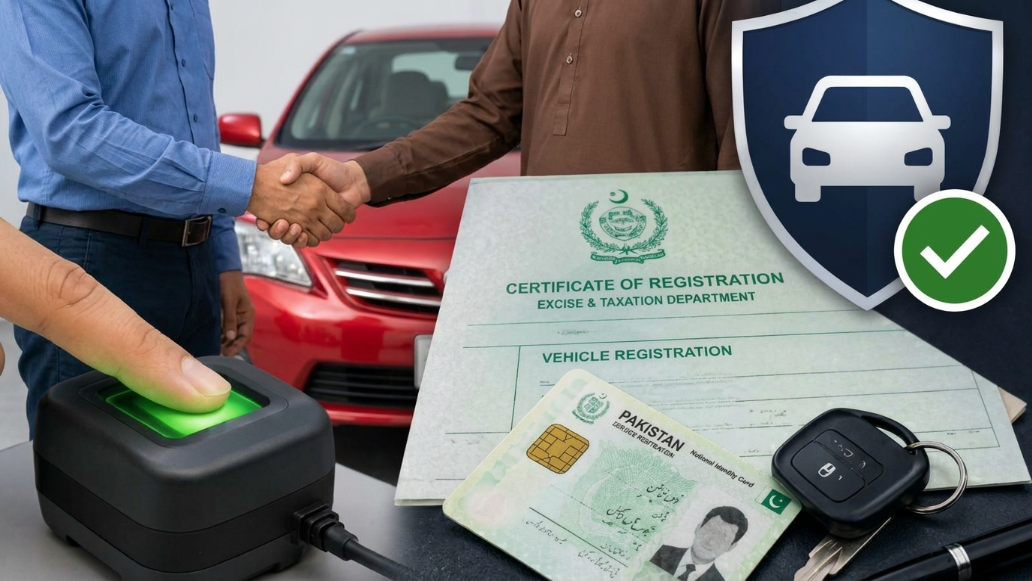
In simple terms, biometric verification means confirming the seller's fingerprint before the relevant Excise Department approves the transfer request. It works as a check that the person agreeing to sell the car is genuinely the registered owner, not someone misrepresenting ownership.
Think of it as an identity lock placed on the deal before the car officially changes hands. Authorized centers handle this verification, and depending on the province and eligibility, some cases can also be processed through approved digital channels.
Step-by-Step: What Buyers Should Confirm First
Before any payment leaves your hand, walk through these basic questions with the seller:
- Is the car registered in the seller's own name?
- Is the seller actually available to complete fingerprint verification?
- Does the seller's CNIC exactly match the registration record?
- Has the transfer process already started, or is it still pending?
A seller who hesitates on these points, or keeps delaying verification with vague promises, is a signal to slow down rather than speed up.
Documents You Need Ready
Keep this checklist on hand before finalizing any used car purchase:
- Original registration book or smart card
- Seller's CNIC and your own CNIC
- A written sale agreement
- Confirmation of token tax status
- Check for pending challans or dues
- Engine and chassis numbers match the documents
Pairing this paperwork check with a proper inspection matters just as much. Our guide on quality-checking used items in Pakistan before you buy applies the same buyer discipline to vehicles, electronics, and other big-ticket second-hand purchases.
Common Mistakes Buyers Make
Many buyers lose control of a deal simply by rushing the final steps. Watch out for these patterns:
- Paying the full amount before the seller's identity is verified
- Agreeing to an open transfer with no clear completion date
- Accepting vague promises like "I'll get it verified later"
- Skipping a side-by-side check of the CNIC against registration details
- Ignoring the unpaid token tax or outstanding challans
- Releasing payment without any written proof
If you are buying for the first time and are unsure how price negotiation fits into this safety process, our article on how to bargain online in Pakistan and get the best price explains how to negotiate confidently without compromising on safety steps.
What to Do If Fingerprint Verification Fails
This happens more often than buyers expect, especially with older sellers, manual laborers, or anyone with weak or worn fingerprints. If a scan fails, do not panic or release full payment as a workaround. Ask the seller to retry at an authorized verification center. If the issue persists, the relevant Excise office can guide both parties through an assisted verification or exception process. Buyers dealing with an overseas, elderly, or otherwise unavailable seller should treat this as a reason for extra caution, not a reason to skip the step entirely.
Trust and Safety: Protecting Your Payment During Transfer
The safest approach is simple: never separate payment from paperwork. A genuine seller will not feel uncomfortable completing identity confirmation and document checks before the final amount changes hands. If a seller pushes hard for full payment up front while avoiding verification, treat that as a warning sign rather than impatience.
This same principle applies across every classified deal, not just vehicles. Our online safety tips for classifieds in Pakistan cover the broader habits that protect buyers and sellers from fraud, whether the transaction involves a car, a phone, or a property listing.
For Sellers: Make Your Listing Transfer-Ready
If you are selling your car, being upfront about its transfer status can speed up your sale rather than slow it down. Clearly state in your listing whether the car is on open transfer, whether biometric verification is already complete, and whether your documents are in order. Buyers are far more likely to commit quickly when this information is visible up front rather than being asked about repeatedly.
If you want your listing to stand out and attract serious buyers faster, our guide on posting a free classified ad in Pakistan shows exactly what details build buyer confidence from the very first scroll.
Before deciding between a used and a new purchase, our comparison of used cars versus new cars in Pakistan can help you weigh the full cost and risk picture, including the transfer process.
Frequently Asked Questions
1. What does NADRA biometric verification mean for car transfer?
It refers to fingerprint-based seller identity verification, used to confirm that the ownership transfer request is genuine before processing.
2. Is biometric verification mandatory for every used car sale in Pakistan?
In most cases, yes, though specific rules can vary by province, so it is best to confirm current requirements with the relevant Excise Department.
3. Can the verification process be completed online?
In some eligible cases, online verification is available through approved digital channels, depending on the province and the vehicle's registration status.
4. What happens if the seller's fingerprints do not scan successfully?
The seller should retry at an authorized verification center. If the problem persists, the Excise office can advise on options for assisted verification.
5. Should I pay the full amount before verification is complete?
No. It is safer to link your final payment to successful seller verification and transfer submission, rather than paying in full beforehand.
6. What is the biggest risk of buying a car on open transfer?
The biggest risk is delay and uncertainty, since the car may remain legally linked to a previous owner until the transfer is properly completed.
Conclusion
A good used car deal is not only about price and condition. It is also about whether ownership can move into your name without complications. NADRA biometric verification provides buyers with a practical way to verify a seller's identity and avoid the most common transfer disputes in Pakistan's resale market.
Ready to look for your next car the safer way? Browse used car listings on DealDone from verified local sellers, or if you are selling, list your vehicle today and reach buyers who already understand what a transfer-ready deal looks like.
For more buyer safety guides and local market updates, follow DealDone on Facebook, catch quick visual tips on Instagram, and connect with us on LinkedIn.