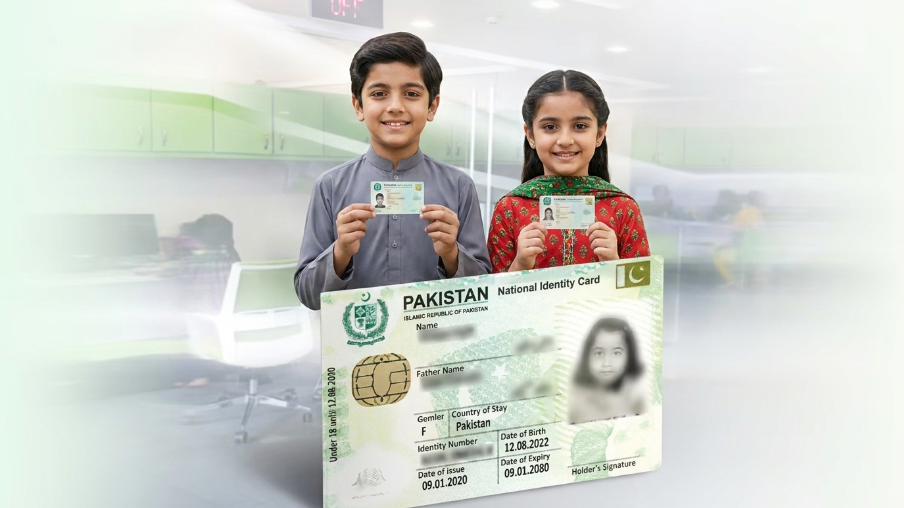
Every Pakistani citizen eventually needs a CNIC, but children under 18 also need an official identity document for school admissions, travel, and various government services. That's where the NADRA Juvenile Card comes in. If you're a parent trying to understand the process before visiting a registration centre, this guide covers everything in simple terms.
What Is a Juvenile Card
A Juvenile Card is a chip-based smart identity card issued by NADRA to Pakistani citizens under the age of 18. It replaces the older paper-based Child Registration Certificate (CRC or B-Form) with a more secure, wallet-sized card that links the child's identity to the national database. It is commonly required for school admissions, medical records, and passport applications, and it automatically transitions into the eligibility path for a full CNIC once the child turns 18.
Who Is Eligible
Under Rule 18 of the NADRA (NIC) Rules, 2002, every Pakistani citizen who has not yet turned 18 is eligible for a Juvenile Card. At least one parent must hold a valid CNIC or NICOP, since the parent's identity is used to verify the child's details and complete biometric authentication during the process. The card remains valid only until the child's 18th birthday, after which they must apply for a standard CNIC.
Documents You Will Need
The documents required depend on whether your child already has a CRC or B-Form on record.
If your child already has a CRC/B-Form:
- Original CRC or B-Form
- Valid CNIC of the accompanying parent or blood relative
- Parent or guardian's biometric verification at the centre
If this is the first registration:
- Computerized Birth Registration Certificate from the Union Council, Municipal Committee, or Cantonment Board
- Detailed Birth Certificate or S-1 Form, for children born abroad
- A recent passport-size photograph of the child
- School certificate, optional, but useful for age verification in some cases
Step-by-Step Application Process
Applying for a Juvenile Card is straightforward if you prepare in advance. Here is what the visit typically looks like:
- Locate your nearest NADRA Registration Centre before heading out to avoid unnecessary travel
- Bring the child in person, as physical presence is mandatory for children above 3 years of age
- Collect a token at the reception counter and wait for your turn
- The child's photograph and fingerprints are captured, with fingerprint scanning typically required for children aged 10 and above
- The accompanying parent provides biometric verification to authenticate the application
- Review the printed form carefully for spelling errors or incorrect details before signing
- Pay the applicable fee based on your selected processing category: Normal, Urgent, or Executive
- Keep the tracking receipt to check your application status later
As of 2026, full online submission is not yet available for Juvenile Cards, so an in-person visit remains necessary for biometric capture. However, some steps, like appointment booking and status tracking, can be managed through NADRA's Pak-ID mobile app.
Common Mistakes That Cause Delays
Many applications get delayed or rejected due to small, avoidable errors. Watch out for these:
- Mismatched spelling of the child's name across different documents
- Missing parent CNIC or an expired CNIC brought to the centre
- Incomplete birth certificate details from the Union Council
- Forgetting the child's physical presence, which cannot be skipped
- Not double-checking the printed form before signing it
Why This Matters Beyond Just Paperwork
A verified identity record isn't only useful for school forms. It also plays a growing role in digital and financial services across Pakistan, from passport applications to biometric verification during major transactions. If you're a parent who has recently dealt with related government processes, our guide on Pakistan's shift to cashless passport fees explains how digital verification is becoming standard across NADRA-linked services. Similarly, families managing vehicle transfers may find our piece on NADRA biometric car transfer safety checklist useful, since biometric identity checks now extend well beyond just personal documents.
A Quick Note for Families Managing Multiple Registrations
If you're also handling SIM registration or device-related paperwork for older children, keep in mind that mobile registration rules have tightened in recent years. Our article on PTA's mobile phone registration guide for overseas Pakistanis may be a useful companion read if your family manages devices or SIMs from abroad.
FAQs
What happens to the Juvenile Card when the child turns 18?
The card automatically expires, and the child becomes eligible to apply for a standard adult CNIC using the same NADRA record.
Is the Juvenile Card mandatory for all children in Pakistan?
It is not strictly mandatory for every child, but many schools, hospitals, and government offices now request it for verification, so it is strongly recommended.
Can overseas Pakistani parents apply for a Juvenile Card for their child?
Yes, parents holding a valid NICOP can apply for a Smart NICOP for Minors, which follows a similar verification process and also supports international travel needs.
Is there a fee for a normal Juvenile Card application?
Standard processing is generally free or low-cost, while Urgent and Executive categories carry additional fees for faster processing.
Can a Juvenile Card be issued if the birth certificate is missing?
In special cases where a birth certificate is unavailable, alternative verification from immediate family members may be accepted under current facilitation policies.
How can I track my Juvenile Card application status?
You can track your application by sending your tracking ID via SMS to NADRA's designated number or by checking the status section on the Pak-ID app.
Final Word
Getting a Juvenile Card for your child is a one-time process that saves repeated hassle later, especially for school admissions, passport applications, and other identity-linked services. Prepare your documents in advance, double-check every detail on the printed form, and keep your tracking ID safe until the card arrives.
For more practical guides on navigating government processes, family documentation, and everyday life in Pakistan, explore our piece on online safety tips for classifieds in Pakistan, and follow us on Facebook, Instagram, and LinkedIn for regular updates.