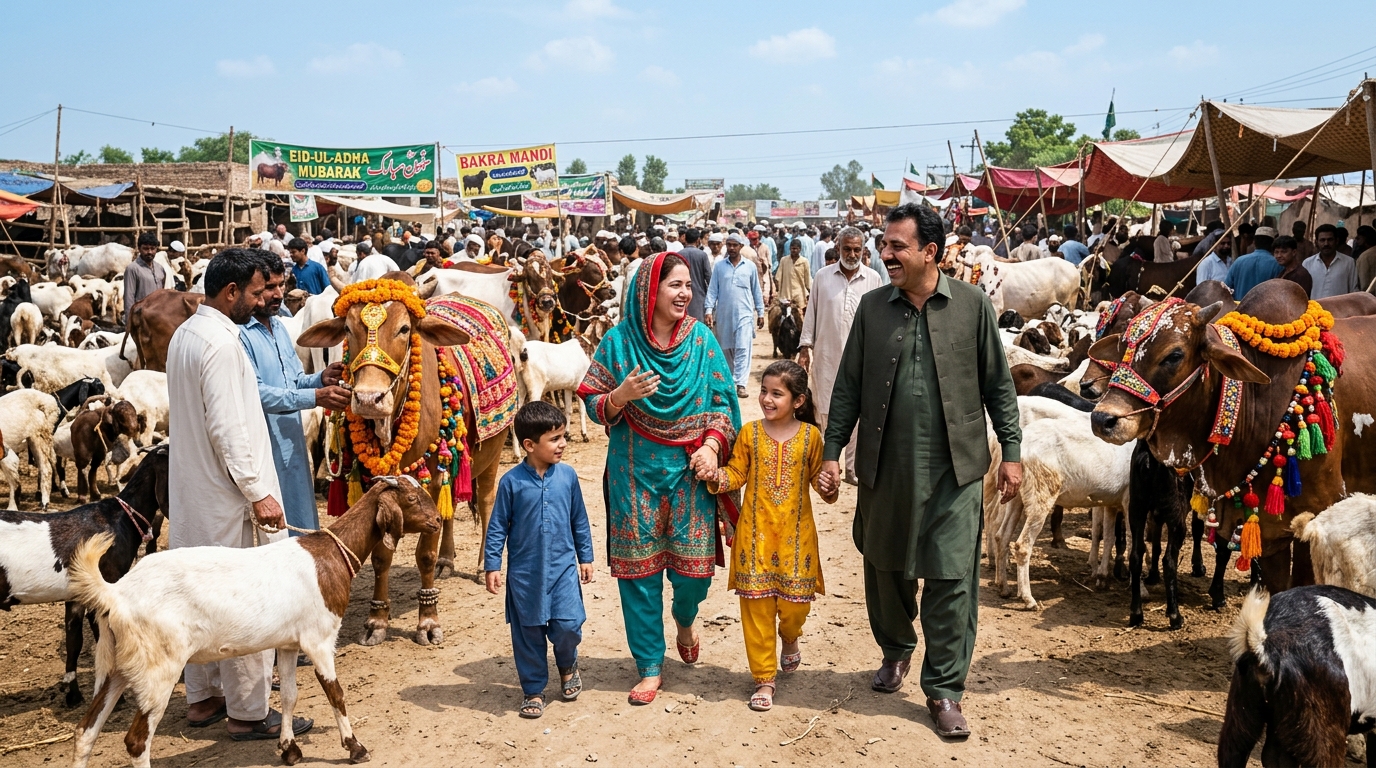
Eid al-Adha is one of the most significant occasions in the Islamic calendar, and for millions of Pakistani families, choosing the right qurbani animal is both a religious obligation and a major financial commitment. With livestock prices climbing each year and mandis getting more chaotic closer to Eid, going unprepared can cost you more than just money.
This guide covers everything you need to know before buying a sacrificial animal this Eid al-Adha 2026 — from Shariah conditions and age requirements to health checks and avoiding overpriced deals at the mandi.
The Shariah Conditions Come First
Before you focus on price or breed, the animal must meet the Islamic conditions for qurbani to be valid. These are not optional checkboxes — they determine whether your sacrifice is accepted.
The animal must be:
- Free from major physical defects such as blindness, severe lameness, or extreme thinness
- Of the correct minimum age for its species
- Healthy and sound at the time of slaughter
If an animal fails any of these conditions, the qurbani will not be valid, regardless of how much you paid. Keep this as your starting filter before anything else.
Age is the One Thing You Cannot overlook
Age is the most critical factor when selecting a sacrificial animal, and it is also the easiest thing for an untrained buyer to get wrong. Many sellers in crowded mandis misrepresent the age of their animals, especially goats.
Here are the minimum age requirements under broadly accepted Islamic guidelines:
- Goat or sheep: Minimum one year old. Some scholars permit sheep at six months if it appears fully mature, but one year is the widely accepted standard.
- Cow or buffalo: Minimum two years old
- Camel: Minimum five years old
The most reliable way to verify age is by examining the teeth. Young animals have small, narrow milk teeth. As they mature, broader permanent incisors replace them. A two-year-old cow will clearly show its first pair of permanent incisors. If you are not confident reading teeth, take someone experienced with livestock, or ask a veterinarian at the mandi. Many mandis have vets present in the days leading up to Eid.
A Practical Health Checklist for Buyers
An animal can look well-fed and groomed but still carry disease or hidden defects. Run through this inspection before you negotiate any price.
Eyes and nose: Eyes should be clear and bright with no discharge. A runny nose or watery eyes can indicate a respiratory infection, which spreads easily in crowded mandis.
Teeth and gums: Teeth must be intact and properly aligned. Missing teeth can signal malnourishment or age concealment.
Skin and coat: The coat should be clean, smooth, and free of bald patches. Visible parasites, skin lesions, or unusual hair loss are red flags.
Legs and gait: Watch the animal walk before you buy. It should move evenly and without hesitation. Any limping, swollen joints, or favoring of one leg is a disqualifying defect.
Breathing and belly: The animal should breathe calmly at rest. A bloated belly or labored breathing in a standing animal warrants concern.
Just as inspecting any item carefully before purchasing is a smart approach, the same discipline applies at the mandi. Never skip the physical examination because the seller is in a hurry.
Choosing the Right Animal for Your Situation
The best animal for you depends on your family size, budget, and logistics.
Goats and sheep are the most popular choice for individual families and smaller households. They are easier to transport, simpler to manage, and available at a wider price range across Pakistani cities and towns.
Cows and buffalo can be shared among up to seven people. They offer a more economical per-head cost, but every share must be confirmed with names and intentions agreed before purchase. Disputes over shares are common and entirely avoidable if you sort this out in advance.
Camels can also accommodate seven shares and carry significant religious merit. They are more expensive and require experienced handlers. If you are going this route, plan well in advance and verify with a scholar if you have questions about shared arrangements.
Buying at the Mandi: How to Not Overpay
Pakistani mandis expect negotiation — it is a normal part of the process. But rushing a purchase because of crowd pressure almost always leads to overpaying for an underqualified animal.
A few practical approaches:
- Visit the mandi two to three days before Eid to compare prices without pressure to buy
- Inspect at least three to four similar animals before settling on one
- Avoid showing excitement immediately — sellers adjust their asking price accordingly
- Ask for a small reduction if you are buying more than one animal
- Know your weight-to-price benchmarks before you arrive
Knowing how to negotiate a fair price on any purchase is a skill that applies just as much at the livestock mandi as it does anywhere else. Go with a number in mind and stick close to it.
Buying Qurbani Animals Through Listings
More buyers are now browsing livestock listings before visiting the mandi, and it is a smart way to compare prices and find farms or sellers near your area. If you find a seller online, always verify the animal in person before making any payment.
Follow safe practices when using classified listings in Pakistan — do not transfer any advance payment to someone you have not met, and always arrange to inspect the animal at the seller's farm or at the mandi before committing.
Sellers: List Your Animals on DealDone Before the Rush
If you are a farmer, breeder, or reseller with animals ready for Eid, listing them early gives you a real advantage. Buyers start searching weeks before Eid, and a well-written listing with clear photos, weight, breed, age, and location gets significantly more inquiries than a vague one.
Posting a free classified ad on DealDone takes only a few minutes. Your listing goes live immediately and reaches buyers across your city who are actively searching.
Frequently Asked Questions
Q1: What is the minimum age for a goat used for qurbani? A goat must be at least one year old. For sheep, some scholars allow a six-month-old if it appears fully mature, but one year remains the safest and most widely accepted standard across Pakistani scholars.
Q2: How can I tell a qurbani animal's age without documents? Examine the teeth. Permanent incisors replace milk teeth as the animal matures. A one-year-old goat will have at least one pair of permanent front teeth visible. A vet or experienced livestock handler can confirm this at the mandi.
Q3: Can I buy a qurbani animal through an online listing in Pakistan? You can search and compare animals through listings, but always inspect the animal in person before paying. Never send money up front to an unknown seller without seeing the animal first.
Q4: How many people can share one cow for Qurbani? A cow, buffalo, or camel can be shared by up to 7 people. Each shareholder must intend to perform qurbani, and all names must be confirmed before the animal is purchased.
Q5: What physical defects make an animal ineligible for qurbani? Animals that are blind in one or both eyes, severely lame, extremely underweight, or missing a significant portion of an ear or tail are generally disqualified. When in doubt, consult a local scholar before purchasing.
Q6: Where can I find qurbani animals listed for sale near me in Pakistan? Local livestock mandis are the most common source. You can also browse animal listings on DealDone to find private sellers and farms in your city before prices peak closer to Eid.
Conclusion
Buying a qurbani animal is an act of worship, and it deserves proper thought and preparation. Check the Shariah conditions first, verify the age through the teeth, run a basic health inspection, and never let mandi pressure rush your decision.
This Eid al-Adha 2026, start your search early. Browse animal listings on DealDone or post your own listing to reach buyers across Pakistan before the rush begins. Stay connected with us on Facebook, Instagram, and LinkedIn for listings, tips, and local updates across Pakistan.