Standing in a bank queue to pay a government fee before you can even begin your passport application is the kind of friction that feels deeply unnecessary in 2026. Pakistan's government appears to agree. A high-level meeting chaired by Director General, Immigration and Passports, Muhammad Ali Randhawa, has confirmed that a fully cashless passport fee payment system is now in active development, with JazzCash, Easypaisa, and the National Bank of Pakistan confirmed as participating institutions.
For the millions of Pakistanis who apply for or renew passports every year, this is a meaningful development — one that speaks to a broader shift in how the country is approaching public service delivery.
What the Cashless Passport Fee System Actually Involves
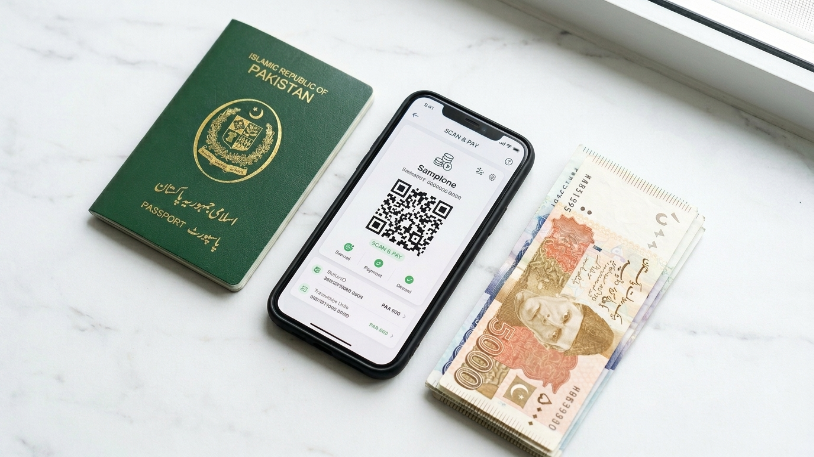
The new system will allow citizens to pay passport fees entirely through digital channels, including mobile wallets, banking apps, and registered fintech platforms, without visiting a bank branch. The payment step — which currently requires applicants to physically deposit cash at a designated bank, keep the receipt, and then present it at the passport office — will be replaced by a digital transaction that automatically generates a verifiable confirmation.
The initiative was discussed in a meeting attended by representatives from the National Bank of Pakistan, JazzCash, Easypaisa, and other financial institutions, all of whom confirmed their cooperation for early implementation. DG Randhawa directed stakeholders to accelerate the rollout, framing the reform as a direct extension of the Prime Minister's vision to modernize government services and eliminate cash handling in public administration.
Which Digital Platforms Will Passport Applicants Be Able to Use?
Based on confirmed stakeholder participation, the following payment channels are expected to be integrated into the cashless system:
- JazzCash — Pakistan's most widely used mobile wallet, accessible even without a traditional bank account
- Easypaisa — the largest fintech-linked mobile payment platform in the country
- National Bank of Pakistan (NBP) banking app — covering customers with standard bank accounts
The breadth of this integration is deliberate. By including platforms like JazzCash and Easypaisa alongside conventional banking, the government is ensuring that the reform reaches citizens who do not hold formal bank accounts but are already active mobile wallet users. Pakistan has tens of millions of such users, and excluding them would have undermined the initiative's very purpose.
How the Application Process Will Change for Citizens
The practical impact on passport applicants will be significant. Once the system is fully live, the process is expected to work broadly as follows:
- Select your passport type, validity period, and processing speed
- Generate a fee reference or QR code through the official portal or Passport Fee Asaan app
- Complete payment through JazzCash, Easypaisa, or your banking app
- Receive instant digital payment confirmation
- Proceed with your passport application using the digital receipt
What disappears from this process is the most disruptive element: the separate bank visit. Applicants who previously had to take half a day off work to queue at a bank simply to deposit a government fee will no longer face that burden. The entire payment process can be completed on your phone in under five minutes.
Why This Reform Is More Significant Than It Appears
The surface change — digital payment instead of cash — is straightforward. But the underlying implications are broader.
DG Muhammad Ali Randhawa specifically cited eliminating middlemen as a core objective. In the context of Pakistani government services, middlemen — known colloquially as dalals — have long inserted themselves into processes that are unnecessarily complicated for ordinary citizens. They charge informal fees for guiding people through steps that should be self-explanatory, and they thrive precisely when government processes are opaque and cash-dependent.
A fully digital, traceable payment system removes the ambiguity that middlemen exploit. When a payment reference is generated digitally, matched to an application, and confirmed automatically, there is no space for an informal operator to claim that "the process requires an extra step." The reform is about governance and transparency, not just convenience.
Increased efficiency, reduced processing times, and greater public trust in government services are outcomes officials have linked to this initiative. Eliminating manual cash handling also reduces the administrative burden on passport office staff, allowing them to focus on processing applications rather than managing cash transactions.
What the Current Passport Fee Structure Looks Like
The fee amounts themselves are not changing as part of this reform — only the payment method is being digitized. Pakistan's passport fees vary depending on the validity period (five or ten years), the number of pages (36 or 72), and the processing speed selected (normal, urgent, or executive fast track).
For the most accurate and current fee figures, citizens should consult the official website of the Directorate General of Immigration and Passports or the Passport Fee Asaan Mobile App, which already supports digital payments and provides up-to-date rate information.
Digital Payments and What They Mean for Everyday Pakistani Commerce
This reform does not exist in isolation. It reflects a wider trajectory in Pakistan — one where digital payments are becoming the baseline expectation for financial transactions, whether with government offices or private sellers.
As more Pakistanis become comfortable completing cashless transactions for official purposes, that same comfort naturally extends to online commerce. Buying a used laptop, selling a piece of furniture, or negotiating for a second-hand car through an online classifieds platform all become less fraught when digital payment norms are well established and broadly understood.
For anyone already active in Pakistan's growing online marketplace economy — as a buyer, seller, or both — building good digital payment habits matters. Understanding how to stay safe when buying and selling through online classifieds is the natural companion skill to operating in a digital-first financial environment.
If you are thinking about starting to buy or sell online, posting a free classified ad on DealDone takes only a few minutes and connects you to thousands of real buyers and sellers across Pakistan. You can also read our guide on how to earn money selling online in Pakistan from home to understand where the real opportunities are in 2026.
Frequently Asked Questions
When will the cashless passport fee system launch in Pakistan? An official launch date has not yet been publicly announced, but the meeting at Passport Headquarters and the confirmed participation of JazzCash, Easypaisa, and NBP indicate the rollout is imminent. DG Randhawa has directed all parties to accelerate implementation.
Can I pay my passport fee using JazzCash right now? JazzCash has been confirmed as a participating institution in the upcoming cashless system. The Passport Fee Asaan app already supports some digital payment functionality. For the fully integrated cashless system, citizens should watch for an official announcement from the Directorate General of Immigration and Passports.
Will I still need to visit a passport office after paying digitally? The cashless system eliminates the need for a separate bank visit for fee payment. You will likely still need to visit a passport office or designated NADRA center for biometric data collection, depending on your application type. The goal is to remove the bank queue step, not the passport office visit itself.
What if I do not use mobile banking or have a smartphone? The initiative includes NBP alongside mobile wallets, providing access for customers with standard bank accounts. The government has indicated that maximum coverage across citizen segments is a priority, though specific provisions for those without digital access have not yet been publicly detailed.
Are passport fees increasing as part of this change? No. The current reform is focused entirely on the payment method, not the fee amounts. The fee structure set by the Directorate General of Immigration and Passports remains in place until any separate official revision is announced.
How does digital payment prevent corruption in the passport process? Every digital transaction generates a traceable record, making it significantly harder for middlemen or informal operators to insert themselves. DG Randhawa specifically cited transparency and the removal of intermediaries as primary goals of the cashless system.
Conclusion
Pakistan's move to cashless payments for passport fees is one of the most practically impactful government service reforms in recent years. By bringing JazzCash, Easypaisa, and the National Bank of Pakistan into a unified digital payment framework, the initiative removes a genuine daily burden from millions of citizens and replaces opacity with traceable, accountable transactions.
This is Pakistan's digital economy maturing — and it is happening faster than many expected. As cashless habits take hold across government services, they naturally extend to everyday commerce. If you want to be part of that shift as a buyer or seller, DealDone is Pakistan's trusted local marketplace where thousands of listings are posted and discovered every day — completely free to join.
Browse live listings on DealDone or post your own ad today and experience the smarter, simpler way to buy and sell in Pakistan.
Follow DealDone for the latest marketplace news and updates on Facebook, Instagram, and LinkedIn.