Every week, thousands of Pakistanis search for property online — a plot in DHA, a house in Gulberg, a flat near the office. And every week, some of them lose money, time, or both because they trusted a listing that was never real.
Property scams in Pakistan have moved online and gotten smarter. A convincing listing with stolen photos, a professional-sounding seller, and a price just low enough to seem like a deal — that is all it takes to trap a careful buyer. This guide breaks down exactly what to look for, what to ask, and how to protect yourself before you hand over a single rupee.
Why Fake Property Ads Are So Common Right Now
Pakistan's property market has exploded on digital classifieds. More people are searching, comparing, and contacting sellers online than ever before. That traffic creates opportunity — not just for genuine sellers, but for scammers who know how to fake a listing convincingly.
Online land fraud in Pakistan thrives because property records are not always digitized, buyers often trust photos over documents, and urgency tactics work well under pressure. Understanding why these scams exist helps you stay calm and skeptical when you need to be most.
For a broader view of how to stay protected on Pakistani classifieds, the guide on online safety tips for classifieds in Pakistan covers essential ground every buyer should know before browsing.
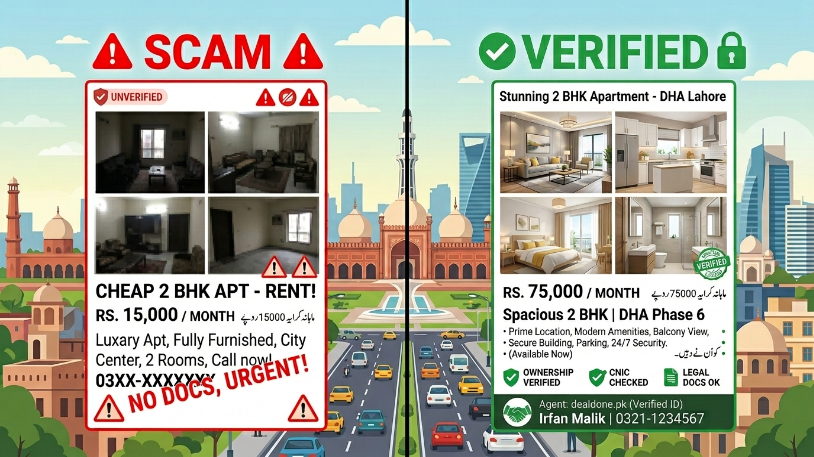
Red Flag #1: The Price Is Too Good to Be True
If a 5 marla plot in a decent Lahore locality is listed at half the market rate, ask yourself — why would any seller leave that much money on the table? A price that feels like a miracle is almost always bait.
Compare any listing with similar properties in the same area before getting excited. If the gap is huge and unexplained, treat it as a warning, not an opportunity.
Red Flag #2: Blurry or Stolen Photos
Scammers rarely have real photos of the property they are faking. They either use blurry images or steal professional photos from other listings.
Run a reverse image search on any property photos before contacting the seller. If those same images appear on other platforms or in different cities, that is a serious red flag. Genuine sellers with nothing to hide share original, current photos and offer a site visit without hesitation.
Red Flag #3: The Seller Avoids Meeting in Person
A legitimate seller wants to close the deal. They will meet you, show you the property, and walk you through the paperwork. A scammer cannot do any of that.
Watch for sellers who push everything to WhatsApp, claim they are overseas, ask for a token payment before you have even seen the property, or are vague about documentation. If someone is selling property in Islamabad but cannot arrange a physical site visit, that alone should stop you.
Red Flag #4: No Verifiable Documents
Before you take any listing seriously, ask for these documents up front:
- Fard — ownership certificate from the land revenue office
- Registry or sale deed — proof of the last legal transfer
- CNIC copy of the seller
- NOC — if the property is in a registered housing scheme
A genuine seller will produce these quickly. A scammer will stall, make excuses, or send low-quality scans that cannot be cross-checked. Knowing how to verify a property ad before visiting saves you from wasted trips — and far worse.
Red Flag #5: Unusual Payment Requests
Never pay token money or advance payment to someone you have not met in person and whose documents you have not verified with the relevant authority.
Scammers often request payment via mobile wallet before a site visit, ask for advance rent to "hold the property," or route transfers through a third party. Safe property buying in Pakistan follows one simple rule: no money moves until documents are verified and a physical meeting has taken place.
For related reading on how to check the legitimacy of listings before committing, the article on how to quality check used items in Pakistan before you buy applies the same careful thinking to other categories as well.
Quick Verification Checklist Before You Pay Anything
- Search the seller's CNIC via NADRA's Pak ID portal
- Cross-check ownership with the local Patwari or land revenue office
- Request a live video call tour of the property
- Ask for photos taken that same day, with a visible current newspaper
- Confirm the address exists on Google Maps or satellite view
- Never skip the physical site visit
- Get a second opinion from a trusted local property agent
These steps take time. They are worth every minute.
How DealDone Keeps Property Listings Trustworthy
At DealDone, listings undergo a review process before going live. Sellers submit accurate details, and buyers can flag anything that looks off directly from the listing page.
If you are searching for a home, plot, or rental, browse property listings on DealDone — a Pakistan marketplace built around local, real listings without the noise of unverified classifieds.
Already have a property to sell? You can post your property listing for free on DealDone and connect with serious buyers across Pakistan without paying a commission.
If you are still deciding whether renting or buying makes more sense for you right now, the breakdown of rent vs buy property in Pakistan — what's better in 2026 is a useful read before you commit to either path.
Frequently Asked Questions
How do I know if a property ad is fake in Pakistan? The most reliable signs include an unusually low price, stolen or blurry photos, a seller who avoids physical meetings, and requests for advance payment before documentation. Any one of these should slow you down. All of them together mean walk away.
What documents should I request before buying property in Pakistan? Always ask for the Fard, registry or sale deed, the seller's CNIC, and an NOC if the property is inside a housing scheme. Verify all documents through the relevant local authority — Patwari, land revenue office, or the scheme's office — before you pay anything.
Is it safe to buy property through online classifieds in Pakistan? Yes, if you follow the verification steps consistently. Insist on a site visit, review all documents in person, and never pay in advance. Using a platform with listing moderation — like DealDone — significantly reduces exposure to unverified ads.
What is the most common type of land fraud in Pakistan online? The most widespread scam involves fake ownership claims — someone lists a property they do not own, collects a token advance, and disappears. Always verify ownership independently before any money changes hands.
Can I report a suspicious property ad in Pakistan? Yes. On DealDone, you can flag any listing directly from the listing page. For serious cases, the FIA Cyber Crime Wing and local police both accept property fraud complaints.
Why are property scams increasing in Pakistan? Rising online property searches, limited digitization of land records, and high demand for affordable housing all make the market attractive to scammers. Awareness and a consistent verification habit remain the strongest defense buyers have.
Conclusion
Property scams in Pakistan are real, they are common, and they are avoidable — but only if you slow down and follow the process. Scammers win when buyers are rushed or skip verification steps. Do not let urgency cost you lakhs.
Start your search on a platform that takes listing quality seriously. Browse property listings on DealDone and find genuine options from sellers across Pakistan. If you have a property to list, post it free on DealDone and reach buyers who are ready to move.
Follow DealDone on Facebook, Instagram, and LinkedIn for new listings, market tips, and buyer safety updates every week.