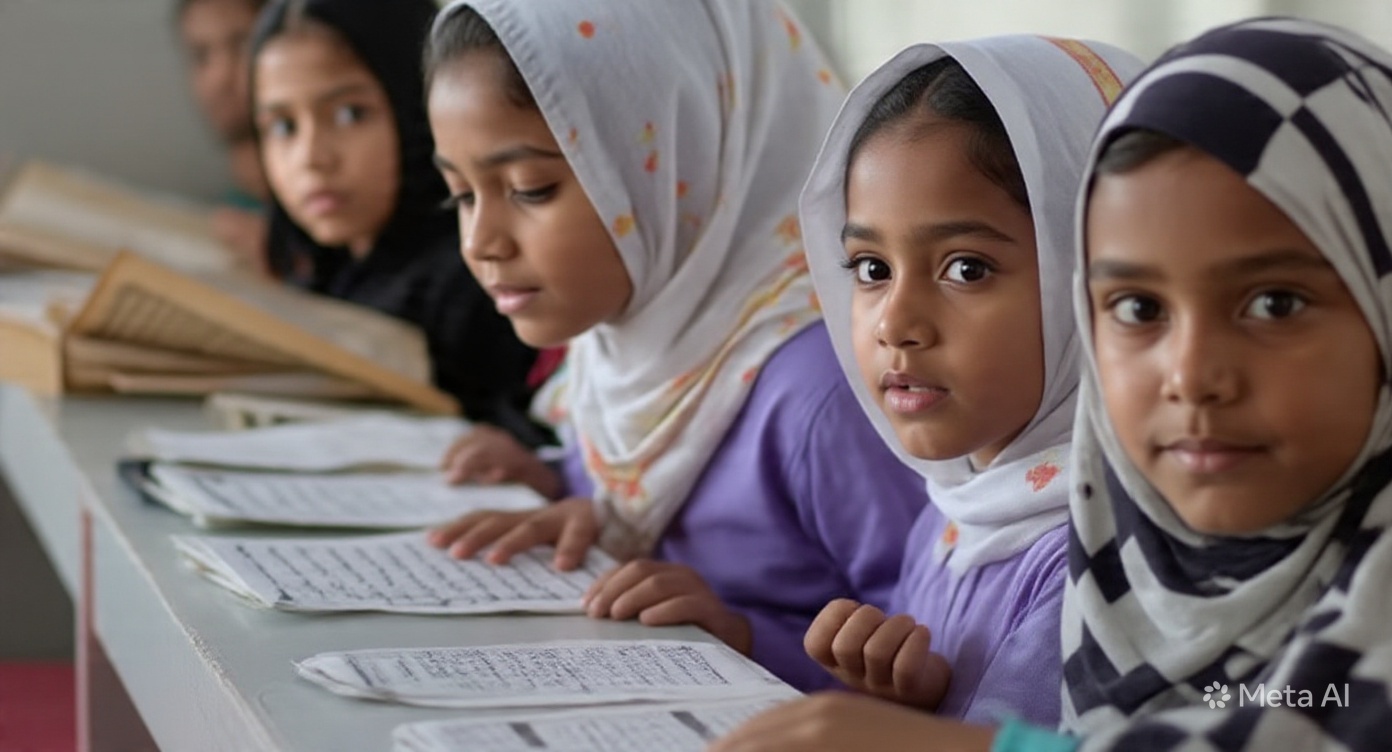
A formal request has been submitted to the Punjab School Education Department by Syed Ahsan Mahmood, a member of the Punjab Quran Board and President of Anjuman Nashiran-e-Quran, seeking immediate enforcement of mandatory Quran education across all private schools in the province. The application, filed with the Secretary of Schools, highlights a growing gap between policy and practice — one that directly affects thousands of students enrolled in private institutions across Punjab.
Punjab was the first province in Pakistan to legislate compulsory Quran education. The law is clear, and public schools are already implementing it. The issue, according to the applicant, is that many private schools are not following through — leaving students without access to the same religious education their counterparts in government schools receive.
For Pakistani parents, this development carries an immediate and practical message: if the enforcement push succeeds, your child's school may begin requiring Quran study materials very soon. Being prepared ahead of time saves last-minute stress and unnecessary expense.
What the Law Actually Requires
The existing legal framework in Punjab divides Quran education across two broad levels of schooling.
Students from Grade 1 to Grade 5 are required to study the Nazra Quran, focusing on reading fluency, correct letter pronunciation, and basic tajweed.
Students from Grade 6 to Grade 12 are required to study the Quran with Urdu translation, building comprehension alongside recitation.
This is not a new policy. It has existed on paper for some time. What has changed is the renewed pressure on private institutions to actually implement it — which means materials, teaching schedules, and qualified teachers all need to align within schools that may have previously ignored the requirement entirely.
Why Private Schools Are Under Scrutiny
The applicant's petition specifically points out that many private schools either do not teach the Nazra Quran at all at the primary level or fail to arrange proper translation classes for Grades 6 to 8. Officials at the School Education Department have acknowledged the matter as important and have assured that effective measures will be taken.
For parents whose children study in private institutions, the takeaway is straightforward: do not assume your school is already compliant. Confirm directly with your school administration whether Quran education is currently part of the timetable, what materials are being used, and whether any changes are planned in response to this enforcement push.
Proactive communication with the school now prevents surprises later.
What This Means for Pakistani Parents Right Now
If your child's school does move to implement the subject formally, the immediate need is clear study materials. Schools typically issue a prescribed book list, and it is important to match it exactly rather than buy independently and discover the edition or publisher differs from what the teacher uses.
Before spending anything, take these steps:
- Contact your child's class teacher or school administration directly
- Confirm whether a specific publisher or edition is required for Quran and Qaida books
- Ask which grades are affected and when the curriculum change begins
- Find out if the school will provide books or if parents are expected to source them independently
Acting early also gives you the advantage of comparing prices and finding good-condition second-hand copies before other parents rush for the same materials.
Getting the Right Study Materials for Your Child
Once you have confirmed what the school requires, shopping becomes straightforward. The core materials most students will need include:
- Noorani Qaida for beginners at the primary level who are starting Arabic letter recognition
- Nazra Quran in the script style and publisher edition prescribed by the school
- Quran with Urdu Translation for middle and secondary school students in Grades 6 to 12An
- Islamic Studies textbook aligned with the Punjab curriculum if the school uses one
For most families, DealDone is a practical starting point for finding both new and used Islamic books from sellers across Pakistan. Local listings frequently offer well-maintained copies at prices well below what new bookshops charge, particularly for textbooks that see relatively light use compared to science or math workbooks.
If you are new to buying through online classifieds, our guide on how to post and browse listings on DealDone covers the basics in simple steps.
New or Second-Hand Islamic Books — What Makes Sense
For a Quran copy, buying new is generally the preferred and more respectful choice for most Pakistani families. A new copy guarantees clean, unmarked pages in the correct script style with no damage to any section.
For Islamic studies textbooks and supplementary workbooks, however, second-hand copies are often an entirely sensible option. These books typically receive far lighter use than core academic subjects, and many sellers offer copies that look practically new. A well-maintained used textbook is both budget-friendly and completely functional for classroom learning.
When checking a second-hand Quran or Qaida in person or through a listing, confirm:
- All pages are intact with no tears or water damage
- Font size is suitable for your child's age and eyesight
- The script style matches what the school uses
- No heavy underlining or written notes appear inside
Our guide on how to quality check used items before you buy in Pakistan covers practical inspection habits that apply to books just as well as electronics or appliances.
Buying Quran Books Safely Through Local Classifieds
Online classifieds offer genuine value for buying Islamic study materials, but a few basic habits keep the experience smooth:
- Always request clear photos of the cover, spine, and several interior pages before confirming
- Verify the publisher name and edition number against your school's prescribed list
- Prefer sellers with complete profiles and quick, clear communication
- Avoid making advance payments to unknown sellers with no visible review history
- Opt for cash-on-delivery or in-person handover wherever it is possible
Staying consistent with these habits protects you from poor purchases and avoids unnecessary disputes. For a more complete picture of safe buying practices, online safety tips for classified buyers in Pakistan is a reliable and practical read.
Frequently Asked Questions
Is Quran education now mandatory in all Punjab private schools?
Punjab law has made Quran education compulsory for all schools, but a formal enforcement petition has recently been filed because many private schools have not yet complied. Officials have acknowledged the issue and assured action will follow.
What Quran subjects are required at each grade level in Punjab?
Students from Grade 1 to Grade 5 must study the Nazra Quran. Students from Grade 6 to Grade 12 are required to study the Quran with Urdu translation under the current Punjab law.
How do I find out if my child's private school is implementing the Quran curriculum?
Contact your child's class teacher or the school administration directly and ask whether Quran education is currently part of the timetable and what, if any, changes are being planned in response to the enforcement requirement.
What materials will my child need for the new Quran curriculum?
Most students will need a Noorani Qaida at the primary level, a Nazra Quran for Grades 1 to 5, and a Quran with Urdu translation for Grades 6 and above. Confirm the exact publisher and edition with your school before buying anything.
Can I buy second-hand Islamic books and Quran copies for my child?
Second-hand textbooks and workbooks are a practical choice for most families. For Quran copies specifically, buying new is generally preferred. Any used copy should be carefully checked for missing pages, damage, and the correct script style before purchasing.
Where can I find affordable Quran books and Islamic study materials in Pakistan?
Local book bazaars, school stationery shops, and online platforms like DealDone all carry Islamic educational materials. Online listings often offer better prices on used textbooks, and you can compare multiple sellers from home without visiting multiple shops.
Conclusion
Punjab's push to enforce mandatory Quran education in private schools is a meaningful development for Pakistani families. Whether your child is just beginning Nazra Quran in Grade 1 or studying translation in Grade 8, the practical preparation is the same — confirm what the school requires, find the right materials at a fair price, and build a consistent learning routine at home.
Browse books and educational listings on DealDone to find available materials near you at prices that suit your budget. If you have school books to sell, post a free listing today and connect with buyers in your area within hours.
DealDone is Pakistan's trusted local marketplace for buying and selling across every category — from books and electronics to vehicles and property. Stay connected and find the best local deals by following us on Facebook, Instagram, and LinkedIn.